
Considering the Role of Race and Power in Clergy Abuse
In 2019, Christopher Spencer Gurley first read news stories about La Jarvis Love and Joshua K. Love, cousins who reported they’d been sexually abused in the 1990s as students at St. Francis of Assisi School in Greenwood, Mississippi. Joshua’s brother, Raphael Love, who was in prison, also disclosed that he had been abused. Their perpetrators were members of the Franciscan Friars, an order based in Wisconsin.
More than two decades after their abuse, Jarvis and Joshua, who are Black, met with a representative of the Franciscan Friars, who offered them unusually small settlements of just $15,000 each in exchange for their silence. The Loves later learned that legal settlements paid to victim-survivors of clergy sexual abuse are typically much larger.
For example, the Diocese of Jackson, Mississippi settled lawsuits in 2006 involving 19 victims—17 of whom were white—with average payments of more than $250,000 for each victim.
“They felt they could treat us that way because we’re poor and we’re Black,” Joshua told a reporter.
Systems that Contribute to Abuse
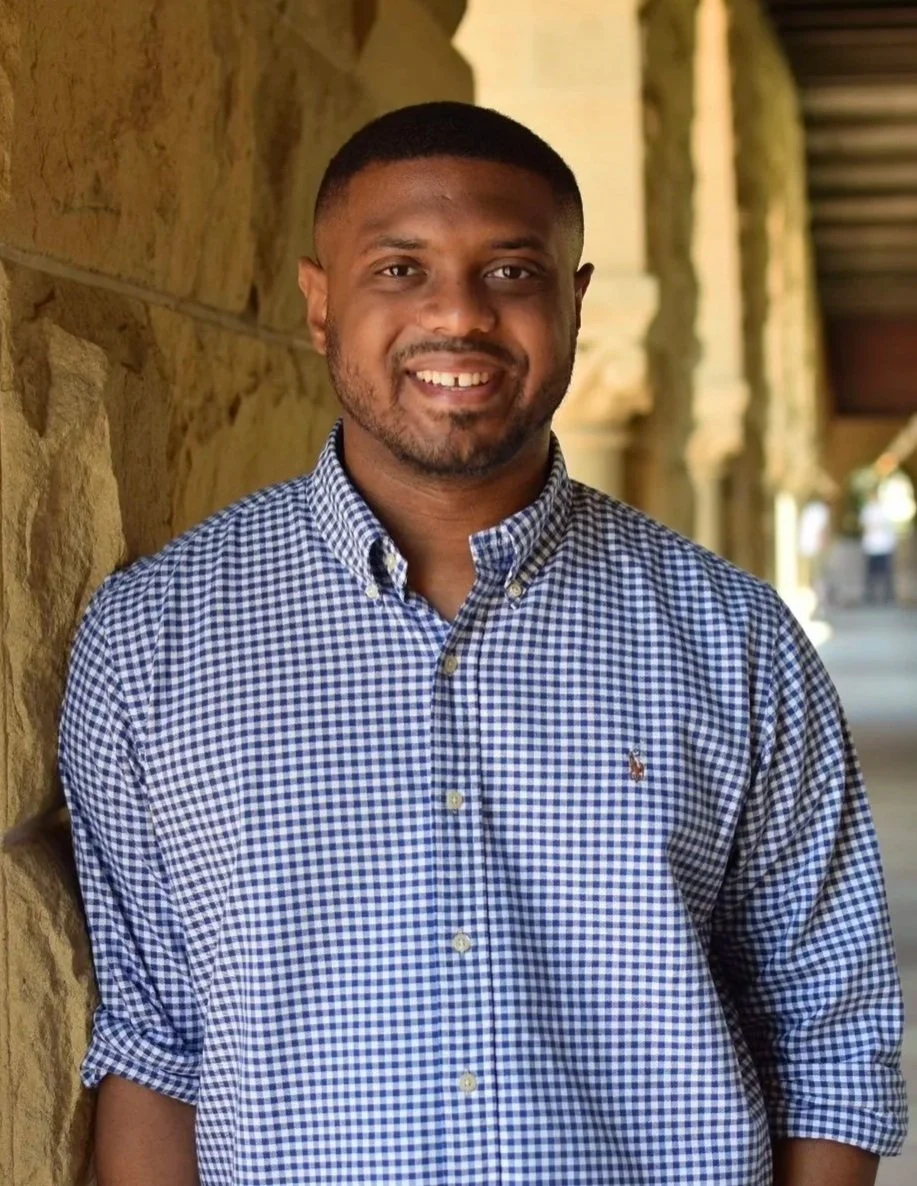
Christopher Spencer Gurley
Gurley, who is Black and Catholic, said that reading about the Loves left him “shocked for days,” in part because this was his first time hearing about Black victim-survivors of abuse in the Catholic Church.
Today Gurley is working toward a PhD at Stanford University, where he studies African American religious history in the nineteenth and twentieth centuries, with a focus on the intersection of Catholicism and race.
Throughout his studies he has continued to reflect on the story of the Loves and the problem of sexual abuse in the Catholic Church. Gurley says learning about their case began to alter his understanding of the sexual abuse crisis. Like many people, he had believed that most clergy abuse survivors are White men, harmed when they were children.
“I’ve also noticed the way that clergy abuse is talked about—as if it’s only a twentieth century phenomenon and it just popped out of nowhere,” he says. “In actuality, nothing could be further from the truth.”
Gurley is interested in long-standing systems that have played a role in abuse. He previously studied U.S. history at Georgetown, a Jesuit university that has grappled with the reality that priests at the school owned enslaved people. Historical records show that in 1838, priests at Georgetown arranged the sale of 272 enslaved people to plantations in Louisiana to pay off the university’s debts, separating families in the process.
Although there are no documents showing that these people were sexually abused by the Jesuits, Gurley sees a direct line between the act of enslaving people and the later violence perpetrated by priests who sexually abused children and adults. These actions are linked by particular attitudes about the priesthood, race, and clerical authority in Catholic communities, he says.
Taking Advantage of “Social Capital”
For centuries, priests and consecrated women and men religious have held “social capital,” which Gurley describes as “the credibility that we lend to particular people that is not easily available to others.” A person with social capital is trusted and well-respected in the community. Clericalism, or the tendency to place ordained men on pedestals, also plays a role, granting these men more value, privileges, and power than other people. “We also see this in cases of predatory women religious,” Gurley notes.
Before the 2002 Boston Globe Spotlight stories increased knowledge about the problem of sexual abuse, and the United States Conference of Catholic Bishops adopted the Charter for the Protection of Children and Young People, “it was nothing to send your kid to work in a rectory,” Gurley says. “If the priest or a sister called you out of class, no one ever questioned that.”
Even now, predators can use their social capital as a cover, “to mask what they are doing,” he adds. If a perpetrator has worked to be well-liked in their community, most people will trust their word over that of a victim-survivor who is less known and respected. The Love family was being abused in an era when the Black community was viewed in light of the crack cocaine epidemic and the rising tensions of racial violence, Gurley says. Who was going to believe three Black boys over White clergy?
Similarly, in nineteenth century Georgetown, who was going to question a priest’s mistreatment of enslaved people, who possessed little social capital in the eyes of most Americans?
Centering survivors instead of clergy is one solution to the problem of clericalism, Gurley notes. “In that case you're participating in what Pope Francis called for, pushing back against clericalist culture,” he says. “The Church is everyone, as Pope Francis used to say, not just priests.”
In the spring of 2025, Gurley wrote an essay on the intersection of race and abuse for the Black Catholic Messenger, and plans, eventually, to write a book on the abuse of Black people in the Catholic Church. But he notes that it has been difficult to gather historical materials about Black victim-survivors.
He also points to findings by Fr. Bryan Massingale, a professor of ethics at Fordham University in New York, a leader in efforts to understand clergy sexual abuse in African American communities. Massingale reports that the Catholic Church has rarely kept information about the racial or ethnic identity of abuse victims, erasing the experience of Black survivors from the narrative about Church abuse.
Understanding the past, Gurley says, is key to finding the right path forward. “These historical questions can produce good policy on how we can move forward in the future,” he adds. “We must realize that [the abuse crisis] didn’t just come out of nowhere. It is deeply rooted in a culture that perceives power and authority in problematic and troubling ways.”
“The past, especially the stories of historically neglected persons and communities, has a great deal to teach the Catholic Church at home and around the world,” Gurley says. “These histories can help us change our future and meaningfully address abuse in our Church.”
—Erin O’Donnell