
Courageous Conversation: Restorative Justice — Healing Possibilities for Abuse Survivors and the Catholic Church
Last week, Awake concluded its sixth season of Courageous Conversations with a discussion of the possibilities of restorative justice as a healing possibility for abuse survivors and faith communities.
Panelists included Drs. Alissa Ackerman and Guila Benchimol, respectively Co-founder and Director of Faith-Based and Community Accountability for Ampersands Restorative Justice, which brings restorative justice practices to people and communities affected by sexual harm. Alissa also served as a research assistant on the landmark 2011 John Jay Report and has written and spoken extensively on the topic of sexual violence. Guila, a trained restorative and transformative justice facilitator, helped launch the Safety, Respect, Equity Network (SRE), an organization that works to ensure safe, respectful, and equitable Jewish workplaces and communal spaces. She also served for several years on the board of the Survivors Network of Those Abused by Priests (SNAP). Meghan Fiebelkorn, Awake’s Associate Director, joined them and shared her perspective as a facilitator of Awake’s Bridge Dialogues.
Catherine Owers, Awake’s Communication and Events Specialist, moderated the conversation. A link to the recording is available below.
How Restorative Justice Unfolds in Faith Communities

Dr. Guila Benchimol
Alissa and Guila shared how their restorative justice work unfolds in real faith communities, where the harm is often both sexual and institutional. One example was the Very Narrow Bridge Project, a multi‑stage process they facilitated for a Jewish denomination. It began with survivor healing circles, moved into a “fishbowl” conversation where survivors spoke while denominational leaders listened, and concluded with a panel discussion. Together, these steps brought all three parts of the restorative justice triangle—survivors, harm‑doers, and community—into the work of repair.
They also described an example of a multi-site Christian church in which no survivors chose to participate. Instead of abandoning the effort, Alissa and Guila guided the denomination through a year‑long accountability curriculum. “Now they have the tools,” Alissa explained, “so if and when sexual harm happens again, they can respond in a restorative, accountable way that does not secondarily harm survivors.”
From these experiences, they named several common misunderstandings about restorative justice. One is around goals: both survivors and institutional leaders often discover, over time, that what they thought they wanted from the process shifts as they gain clarity. For survivors, Alissa offered a grounding reminder: “You cannot rely on the institution that harmed you to heal you. They can take accountability, they can do the hard work, but healing is still an internal job.”
Guila spoke to the confusion that often arises in faith communities themselves. Because these communities are close‑knit, people may not understand their role or may believe they are uninvolved. “If we act like the community is uninvolved, that’s a fallacy,” she said. Community members can support survivors, help those who caused harm take accountability, and also attend to their own healing. As Guila noted, they are often “caught up in the wave of those ripples” — sometimes harmed, sometimes part of the harm.
Entering Restorative Justice with Clarity and Care
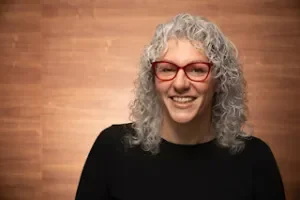
Dr. Alissa Ackerman
The conversation then turned to what survivors should know before entering a restorative justice process. Guila noted that restorative justice can be healing, but recovering from the original trauma “is work that survivors need to ensure they’re doing with the appropriate professionals.” She also named several realities survivors should be prepared for. First, the process won’t work without trust in the facilitators, which can take time to build. Second, difficult emotions and questions may surface, including moments of doubt about whether to continue. Third, there are no guarantees, which can feel unsettling for survivors who have already endured so much. And finally, restorative justice requires significant emotional labor; survivors need to be well‑supported and well‑resourced throughout.
They also offered “green flags” that signal readiness. For survivors, this includes being grounded, self‑aware, and having goals aligned with what restorative justice can realistically offer. For institutions, green flags include budgeting for the process, inviting survivor voices into design and oversight of the process, and demonstrating a genuine intention to change.
A powerful moment in the conversation came when Guila described what survivors often name in listening sessions. When asked who they hold responsible for the harm, or whom they would want to speak to if given the chance, “about 98% of the time, it is not the perpetrator.” This insight opened a deeper discussion about the role of the community. “If we treat [sexual harm] like an individual problem, we’re never actually going to get to the root cause,” Alissa said. Guila added that concerned members of their faith communities join conversations like this, wondering what their role might be. “Sexual harm is not something that they did over there,” she said. “We are all a part of it, and we have opportunities to create change.”
Join Us for Small Group Discussion!
On Thursday, May 21, at 7pm CDT members of the Awake community will gather for small group discussion on Zoom. We’ll be sharing what ideas resonated with us and how each of us might incorporate restorative practices into our own lives.
Humanity and Accountability
The panelists also reflected on how their collaboration has required tough conversations. One tension centered on the idea of “honoring the humanity” of harm‑doers. Guila named how difficult that phrase can be for survivors, and how important it is to slow down and clarify what it means. Together, they emphasized that it is never the survivor’s job to humanize the person or institution that harmed them. That responsibility belongs to the facilitator.
Alissa explained why recognizing the humanity of the harm-doer, whether an individual or an institution, matters. Harm‑doers cannot take responsibility if they feel shamed or judged. Facilitators must build the trust necessary to help them face the truth of what they’ve done. “Connecting on that human level,” she said, “is what helps move people toward a place where they stop causing this kind of harm.” Guila noted that institutions carry their own shame and fear, even though they hold significant power. Restorative processes help both survivors and institutions name that shame and redirect it toward meaningful change. When a harm‑doer or institutional leader takes responsibility and commits to concrete steps forward, survivors can finally set down the burden of monitoring them.
How Institutions Can Engage Restorative Justice Responsibly
In the final chapter of the conversation, the panelists discussed what offering responsible restorative justice opportunities entails. Alissa emphasized that any restorative justice effort must be survivor‑centered and survivor‑driven. Institutions often initiate the conversation, she said, but they cannot drive it. Further, listening alone is not enough; restorative justice requires meaningful, sustained change. “If the changes you’re making aren’t based on what survivors need,” she noted, “then you’re doing it wrong.”
Guila added that restorative justice is not a buzzword but a real, structured practice. Church leaders can and should seek guidance from trained practitioners, assess their readiness honestly, and begin with a commitment not to cause further harm. “How are you going to do it in a way that does not cause further harm is really, really key before you engage,” Guila emphasized. “You can't start it and then say, now we're not going to cause harm. You've already caused harm. So you have to start with, how are we not going to cause further harm?”
Awake’s Bridge Dialogues program offers one model of this work. As Associate Director Meghan Fiebelkorn explained, the dialogues bring together three survivors and three priests for a single, confidential, carefully facilitated conversation. Survivors consistently describe how powerful it is to be heard and believed, especially when past disclosures were met with disbelief or blame. Priests often share that the experience humanizes the issue and reshapes their ministry. Meghan reflected on the “sacred nature” of these conversations and the importance of transparency and preparation in creating a safe space.
In closing, Alissa reminded us that restorative justice starts with our way of being with each other. Restorative justice begins in the small, everyday choices we make: honoring the humanity of the people we encounter, standing with those who are oppressed, speaking truth when we witness harm, and taking responsibility for our own mistakes. “If people are trying to figure out ways they can do this,” she said, “it starts there. It starts with how you are.”
—Katie Burke-Redys