
Alexandra Buchlmayer
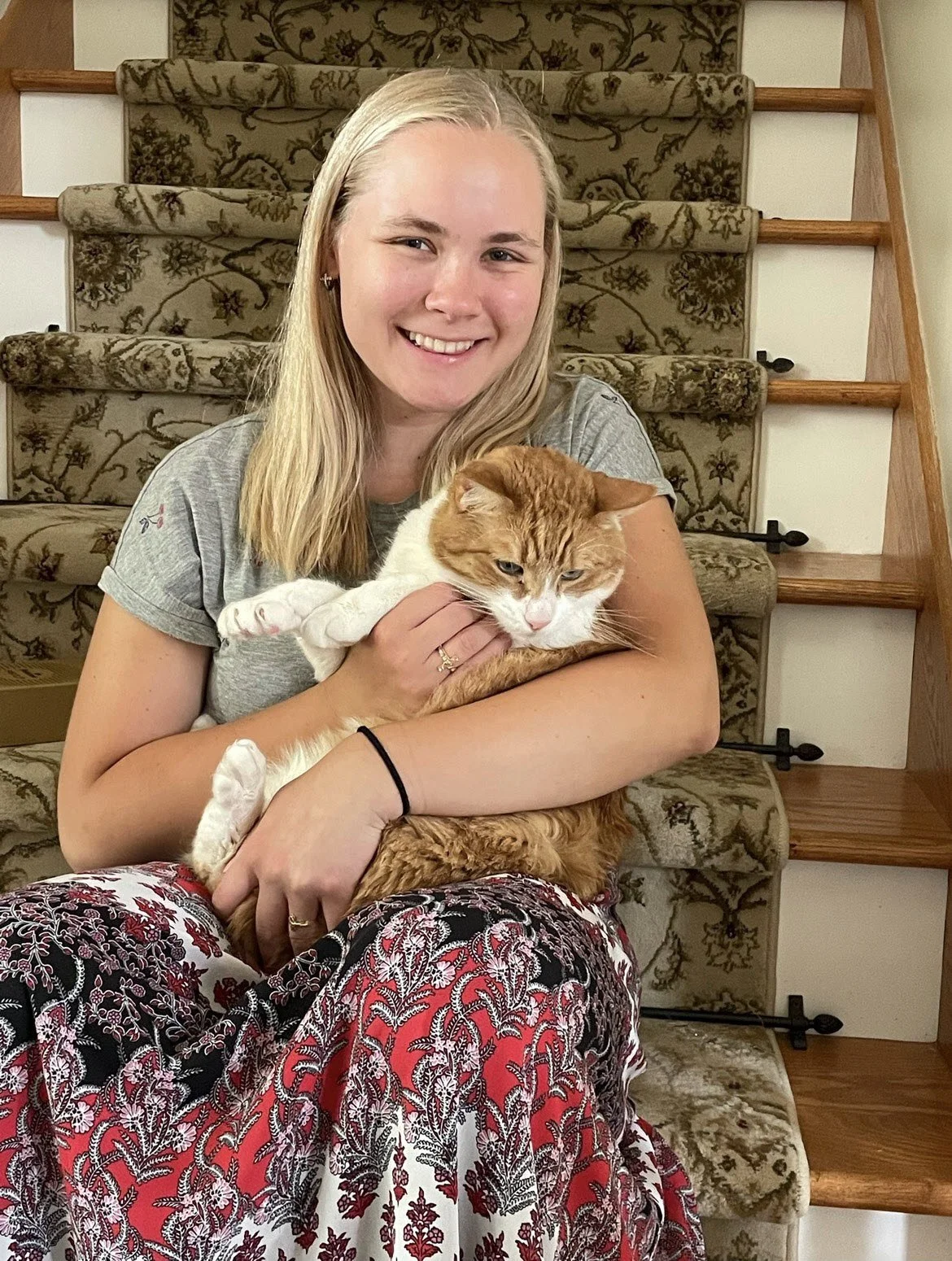
“Owning my story, despite the lack of legal action, was a huge part of my healing journey. It broke the bonds of secrecy and shame.”
Awake: Alexandra, we’re grateful you chose to share your story with the Awake community. As we begin, what would you like to tell us about yourself?
Alexandra Buchlmayer: I’m a 22-year-old California native living in Wisconsin. My main goal in life is to enter heaven and to bring as many souls with me as possible. I’m a fairly traditional Catholic; I love the Latin Mass, veiling, receiving the Eucharist on the tongue, and participating in daily Mass. I spent the last five years discerning religious life and lived with the Passionist Nuns in Whitesville, Kentucky this past January. While I love the nuns, I discerned that God is calling me to marriage and family life instead. I graduated last year with a major in clinical psychology and a minor in theology. I am currently applying to PsyD programs and am working as a mental health technician for Rogers Behavioral Health. Since 2021, I have been balancing life with fibromyalgia and idiopathic hypersomnia, which has been its own difficult journey. Other fun facts about me include my love for Zumba, hiking, and holistic-nontoxic living.
Q: It sounds like your life is very full with important decisions, fun activities, but also painful realities, including healing from the abuse you experienced. What would you like to share about your abuse?
A: Growing up with few friends and low self-esteem, I developed a pattern of connection-seeking behaviors towards my teachers. The only one to reciprocate was my 28-year-old theology teacher when I was a freshman in high school. She increased my love for the Catholic faith and our Lord tenfold. Throughout my time in high school, we ate lunch privately in her classroom and bonded over our love of God and shared loneliness. We became even closer when I asked her to be my Confirmation sponsor, and we started going to daily Mass together. I constantly sought ways to bring joy into her life and I, myself, loved the attention. By age 17, I considered her my best friend, despite the 14-year age gap and power differential.
During my junior year, the grooming behaviors began. There were hours of private communication daily, and frequent hugs and hand-holding; she also asked me to keep secrets regarding personal information. When I excitedly told her I had my first kiss on my 18th birthday, she became jealous. Around this time, our relationship quickly evolved from platonic to romantic. She even shared that there were no boundaries between us, except she still didn’t let me call her by her first name or enter her house until graduation. In December of my senior year, she kissed me on the lips for the first time and I immediately began to cry. The years of lying, secrecy, and shame began. It took weeks to stop fearing her, but once I did, this romantic relationship became our new normal. The cognitive dissonance that was my life had me hating myself, and I began to develop an eating disorder. After graduation, parts of me began to die inside as we started having sleepovers which grew continually more sexual in nature. This led me down a long road of questioning my own sexuality. To this day I fear my capacity to love others. Every few days I found myself begging for God’s mercy in the confessional.
In December of 2022, a video on grooming in a college class triggered me. It was like watching my relationship with my theology teacher unfold before my eyes. I was still in denial that what was happening to me was actually abuse, yet I knew I needed to confront her and put an end to what was going on. In order to stay friends with me, she agreed. Although we were no longer physically intimate, we remained codependent. She was very jealous of my friends and my religious discernment. She expected me to call her every night; if I was distracted or didn’t call, she would question my love for her. This led to me missing out on a lot socially, and she became suffocating.
That summer I was invited to enter aspirancy, the first stage of formation, with the Passionist Nuns, even after sharing with them what had happened. However, they asked me to have no contact with her for three months to break any disordered bonds left between us. I wailed more profoundly than I ever thought possible the first two nights, but thanks to my spiritual director, I found great freedom in it. However, I constantly worried about my teacher because of her depression and the fact that she had told me that she would not be able to live without me. So, I decided to ask the campus therapist about how to stop my obsessive worrying. After hearing what happened with my teacher, my therapist compassionately shared the truth that this was abuse. She had been my teacher and I, her student. From there we worked on building up my self-esteem and self-confidence, learning about healthy boundaries, and healing the shame I felt for letting the abuse happen.
The real healing work began my last semester of college when I opened up about the abuse to close friends. I found it both healing and surprising that they did not hate me for it like I had hated myself. Then, I knew I could not heal any further without my parents' support. My mom’s words, “We are not mad at you,” touched the depths of my soul, and I burst out crying in relief. This was a pinnacle moment in my journey--the day I went from victim to survivor. Telling the nuns and my parents were the two scariest days of my life but also deeply enriched my understanding of the true expansiveness of God’s love and mercy. Two days later, with my consent, my college informed my high school of the abuse. Since then I have continued to seek healing and personal growth.
Q: Alexandra, I’m so sorry this happened to you. This never should have happened between a student and a teacher. What would you say has been the most difficult part of your journey as a survivor?
A: Being a victim-survivor comes with many challenges, with forgiveness and PTSD symptoms the most difficult for me thus far. God’s call to forgive seventy times seven times has never felt as difficult as it does now. My abuser’s lack of remorse and the duration of the sexual and emotional abuse makes forgiveness an arduous journey. While I am grateful the archdiocese prevented her from teaching in the archdiocese again, there were no criminal or civil penalties to prevent her from teaching elsewhere. I still harbor a lot of anger about the lack of consequences for her actions. It has also been painful watching some friends distance themselves from me after learning what had happened, as if I was the perpetrator and not the victim. Regarding the PTSD symptoms, I may struggle for the rest of my life with trusting others’ love for me and my love for others, nightmares, and intrusive thoughts. The idea that she had eyes full of desire for me while I was still a teen scares me. I used to love my teachers, but I am much more guarded now, and hearing the word 'teacher' pierces my heart. Since she was my theology teacher, my relationship with God and the Church has been tainted with fear, anger, and anxiety.
Q: Naming forgiveness as an arduous journey so clearly evokes the many struggles you have faced since reporting your abuser. Why have you chosen to share your story with Awake?
A: I chose to share my story for two reasons. First, I want to raise awareness that abuse in the Church extends beyond priests, including women in positions of authority. One’s religiosity or gender does not make someone incapable of grooming a vulnerable person. If you suspect abuse, ask the potential victim. Do not assume that just because you know both parties or that the victim looks happy that nothing is going on. Many of the people I confided in confirmed they thought something was wrong but never felt like it was their place to ask. Others thought the possibility of her abusing me could never happen because we were both so religious. I was hurt and angry people thought something was going on and never approached me to ask. Maybe it could have ended earlier. Second, I want to provide hope and be a witness to other victim-survivors, particularly young people, that reporting your abuser and owning your story is healing. Such reports can possibly prevent abuse from happening to others. It’s also never too late to come forward, even if legal action cannot be taken. Owning my story, despite the lack of legal action, was a huge part of my healing journey. It broke the bonds of secrecy and shame.
Q: Thank you for raising our awareness to how abuse can happen in plain sight and of our responsibility to ask questions when our suspicion is raised. In your journey toward healing, who or what has been the most helpful?
A: Dr. Emily Ransom has inspired and helped me in my healing journey as she is also a victim-survivor and witnesses to strength, healing, courage, forgiveness, and redemption. I reached out to Emily to ask if she had PTSD symptoms and how she dealt with them, because they had begun to consume me. Once I opened up about what had happened, her empathy and support was beyond expected and particularly redeeming for me. I was abused by a teacher, and to have another teacher condemn my abuse and support me through the entire reporting and healing journey was immensely healing for the trust-wound that I had developed against teachers. Her genuine compassion, zeal, and witness to me as someone who has forgiven her abuser, have all been particularly helpful when few else were there for me and none else understood the pain I grappled with. She connected me to Title IX and Awake when I was too afraid to approach them myself. I hope one day to be an instrument of healing for others as she has been for me.
Q: What a powerful example of how survivors uniquely support each other. Thank you for so courageously sharing your story with us. As a final question, are there any lessons you have learned that other victim-survivors might benefit from hearing?
A: There are several lessons from my journey which may be valuable to other victim-survivors. First of all, abuse is never your fault, even if you fell in love with your abuser like I did. Much of the abuse starts with the mental manipulation beforehand. Abusers may not accept responsibility for their actions and may try to gaslight the victim into thinking it was the victim’s fault or that it never happened. While I still struggle with accepting this reality, watching Law & Order: SVU has helped me see that my abuser is not the only one who refuses to admit responsibility, and that this doesn’t have to prevent my healing.
Another lesson came from my spiritual director, who reminded me many friends don’t talk on a daily basis. So the fact that I felt intense pain at the beginning of the three month no-contact period indicated we were more than friends. His comment gave me the awareness and conviction needed to let go and move on from what I thought was just a close friendship at that point. It helped me realize how unhealthy my codependent relationship had become with my abuser. My grief, prior to his comment, revealed how such bonds restrict personal freedom. May his advice provide the strength necessary to break free from similar bonds.
Finally, know that your abuse does not define you. You are so much more than what happened to you. You matter and are worthy of true love, of God’s love. You are also worth getting the help needed to heal no matter the extent of your abuse. It helped me heal to do everything my abuser never let me do, as a way to regain control. I also wrote her a detailed letter about how the abuse impacted me and that despite my working to forgive her, I would never allow her back into my life. Forgiveness does not equal reconciliation or condoning abuse. It’s a daily choice to let go of the anger and hatred in my heart to move forward in healing. It means reaching the point where even though I was deeply hurt, I can pray that she reaches heaven. She broke me, but I will not remain broken. I lost my innocence because of her, but I will continue to seek to regain purity and chastity as I grow. She no longer has any power over me.
—Interview by Catherine Burke-Redys
Note from Awake: We extend heartfelt thanks to Alexandra Buchlmayer for sharing her story. We also want to acknowledge that every survivor’s path is different. We honor the journeys of all who have experienced sexual abuse by Catholic leaders and are committed to bringing you their stories. In addition to Alexandra’s story, we encourage you to read our previous Survivor Stories here.
If you have experienced sexual abuse, you can receive support through the National Sexual Abuse Hotline, 800-656-4673, which operates 24 hours a day. If you seek support from the Catholic Church, you can find the contact information for your diocesan victim assistance coordinator here. Also, Awake is always open to listening to and learning from survivors. If you would like to connect with us, we invite you to email Executive Director Sara Larson at saralarson@awakecommunity.org.