
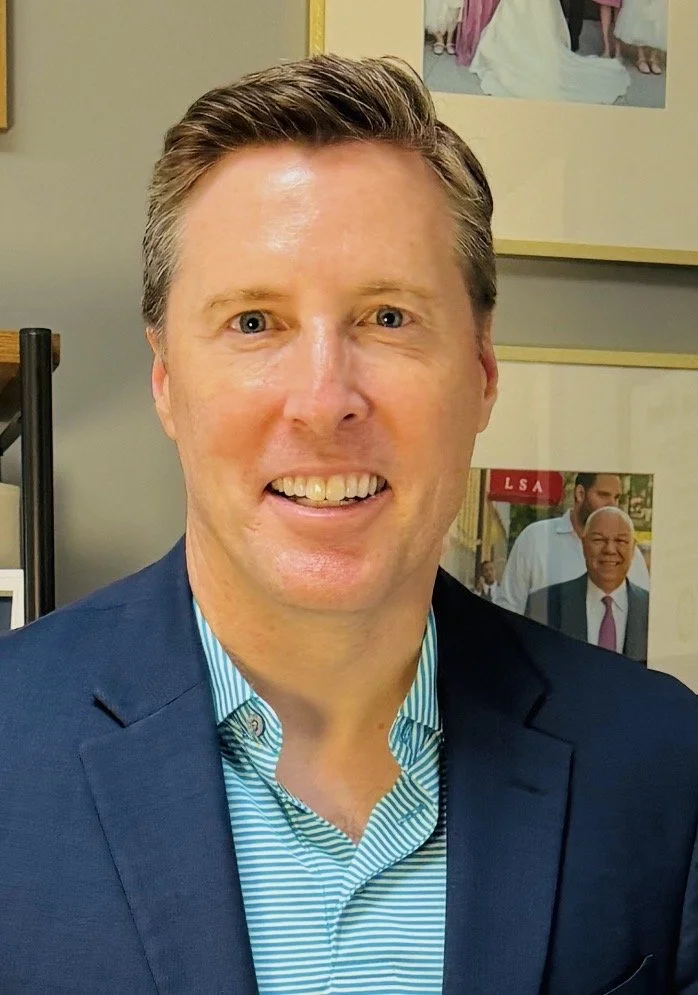
Bill Hambleton
“I would like Catholics to understand what it takes for a survivor abused in the church to walk into a diocese and tell their story. Most people never see the mountains that a survivor has had to climb just to reach that moment.”
Awake: We are so glad that you are sharing your story with us, Bill. Please introduce yourself and tell us a little about your life.
William Hambleton: I have spent nearly thirty years in Catholic education, many of them as a school leader. I served as principal of the Madeleine Choir School in Salt Lake City; president of La Salle Academy in New York City; head of school at the School of the Holy Child in Rye, New York; head of school at Lacordaire Academy in Montclair, New Jersey; and president of Bishop Alemany High School in Los Angeles. After years in administration, I’ve returned to the work that first drew me to education: the classroom. I now chair the religious studies department at a Catholic boarding and day school, where I also teach scripture to tenth graders.
My own formation began in seminary, with studies at the Pontifical College Josephinum and four years at the Pontifical North American College in Rome. I later earned my doctorate in education from the University of San Francisco.
I grew up in Utah, where I spent much of my teenage years on the ski slopes. Today I live in Southern California with my wife and daughter. My daughter is a competitive equestrian, and some of my happiest hours are spent watching her ride.
Q: That sounds terrific, Bill. Thanks for sharing these details about your background and what gives you joy. If I could change directions, what would you be open to sharing about your experience of abuse?
A: I was raised in a devout Catholic family, and as a teenager I began to discern a call to the priesthood. A priest of the Diocese of Salt Lake City befriended me and presented himself as a mentor. Over time he began to sexually molest me. After high school I entered the seminary for the Diocese of Salt Lake City and was sent to study in Ohio. During my freshman year of college seminary, my abuser was expelled from the diocese, only to be accepted into the Archdiocese of Detroit. On one occasion he traveled from Detroit to visit me at my seminary in Ohio, and he sexually assaulted me again.
Decades later, I finally found the courage to report the abuse to the Diocese of Salt Lake City, the Archdiocese of Detroit, and the Diocese of Columbus. From all three I met evasion and adversarial treatment, and I found the reporting process to be retraumatizing. I eventually wrote about my experience in a memoir, The Sacred and Profane: A Memoir of Faith and Reckoning, published by Canterbury O’Keefe Press.
Q: I’m so sorry that you were harmed by the abuse and then the reporting process. It sounds like over time you’ve found your voice, both in your book and the other places you’ve shared your insights. For example, you shared your story in an Awake Courageous Conversation in February. Can you tell us why you decided to share your story?
A: After my abuse, I felt isolated for many years. I lost my ability to trust people, and I built emotional walls around myself to keep others at a distance. Those walls shaped my relationships for a long time, often in ways I didn’t fully recognize. It was only when I shared my experience with my wife, Stacy, that I began to find a sense of peace. Being able to speak openly, and to be heard, made a difference I hadn’t expected. My hope is that other survivors of abuse in the Church can find that same peace, and that by sharing my story, I might encourage others to come forward and begin their own healing.
Q: Thank you for describing the healing power of speaking openly and being heard. What would you say has been the most challenging part of your journey as a survivor?
A: My faith has always been at the center of my life, and I am deeply grateful to my parents for giving me a faith that ran deeper than any institution. Even as a teenager I was somehow able to separate the actions of my abuser from the Church I loved, and that faith sustained me.
When I came forward decades later, I hoped to be met with the same care the Church had taught me to show others. Instead, I encountered bishops and diocesan leaders who seemed more concerned with protecting the Church’s reputation than with my well-being. That indifference left me profoundly disillusioned, and in many ways it was the hardest part of the entire experience. It was painful to see shepherds I had trusted fall short of the Gospel they preach. I still love the Church, but I recognize that it needs meaningful reform to become a place where survivors are truly heard.
Q: Encountering that self-protection and indifference must have been painful, Bill. What gives you hope as a survivor?
A: My daughter inspires me. From the day she was born, her goodness and innocence have been a north star for me. Becoming her father gave me a reason to look honestly at the walls I had built and to begin taking them down. She trusted me completely, the way children do, and I wanted to be worthy of that trust. In striving to be a man she could rely on, I slowly found my way back to trusting others.
Q: That’s beautiful and moving, Bill. How do you describe your relationship with the Church today?
A: I love the Church critically. I remain a practicing and devout Catholic, but at the same time, I have no illusions about the Church. I know what it’s capable of. I know what it feels like when a bishop offers a partial apology to a survivor of clergy sexual abuse while his vicar general broadly disparages the same victim.
I know what it is to hear a bishop defend the destruction of official Church documents on the grounds that it was common practice in past decades. I know what it’s like to correspond with a papal nuncio until he abruptly stops answering when the questions become more difficult. I know these things not as abstractions but as specific memories with specific faces attached to them.
I love the Church, but to do so I have to separate the institution from the community of the baptized. The institution is flawed, but the community is something else entirely. When I walk into my parish every Sunday morning, I am not walking into a chancery office. I am walking into something no chancery controls and no one can corrupt.
Q: Thank you for sharing all of these valuable insights, Bill. We’re glad to learn from you and pray for your continued healing. As we close, what’s one idea that you would like Catholics to understand about sexual abuse in the Church?
A: I would like Catholics to understand what it takes for a survivor of abuse in the Church to walk into a diocese and tell their story. Most people never see the mountains that a survivor has had to climb just to reach that moment: the years of shame and fear, the self-doubt, the worry about not being believed. Coming forward is often the hardest thing a survivor will ever do.
For me, the road was long and difficult. It took thirty years, and the loss of my only brother to suicide, before I was finally able to report my abuse. His death made me realize I could no longer carry my silence.
That is why the Church’s response matters so much. When a diocese answers with evasion, or puts its own reputation ahead of the healing of the person in front of it, the effect on the survivor is devastating. A compassionate response, on the other hand, can be the beginning of real healing.
—Interview by Erin O’Donnell
A Note from Awake
We extend heartfelt thanks to Bill Hambleton for sharing his story. We also want to acknowledge that every survivor’s path is different. We honor the journeys of all who have experienced sexual abuse by Catholic leaders, and we are committed to bringing you their stories. In addition to Bill’s story, we encourage you to read our previous Survivor Stories here.
If you have experienced sexual abuse, you can receive support through the National Sexual Abuse Hotline, 800-656-4673, which operates 24 hours a day. If you seek support from the Catholic Church, you can find the contact information for your diocesan victim assistance coordinator here. Also, Awake is always open to listening to and learning from survivors. If you would like to connect with us, we invite you to email Survivor Support and Engagement Coordinator Rebecca Dodge at rebeccadodge@awakecommunity.org.