
Courageous Conversation: The Role of Seminaries in Creating a Safer, More Compassionate Church
Last week, Awake gathered voices deeply engaged in seminary life to explore how seminaries can respond to the crisis of sexual abuse in the Catholic Church.
Panelists included Fr. Tom Berg, visiting professor at the University of Notre Dame and member of Awake’s board of directors; Mary Glowaski, Assistant to the Bishop in Pastoral Care in the Diocese of Fort Wayne–South Bend and former Victim Assistance Coordinator; and Dr. Jim Richter, physician, survivor of abuse, and longtime advocate.
The discussion was moderated by Dr. Christian Krokus, professor of Theology and Religious Studies at the University of Scranton. A recording of the event is available below.
Seminary Formation in the United States
An overview of seminary formation in the U.S. introduced and grounded the conversation. Catholic seminaries are institutions where men undergo a multi-year process to prepare for priesthood, typically lasting at least five years. Formation develops seminarians across four dimensions: academic, pastoral, spiritual, and human. Most candidates earn at least a Master of Divinity degree, which is ordinarily a requirement for ordination.
While seminaries across the country follow norms established by the United States Conference of Catholic Bishops and approved by the Vatican, each seminary, which is under the oversight of its local bishop, retains significant autonomy in how those norms are applied. This means that while guidelines are shared, the lived experience of seminarians can vary widely depending on the institution.
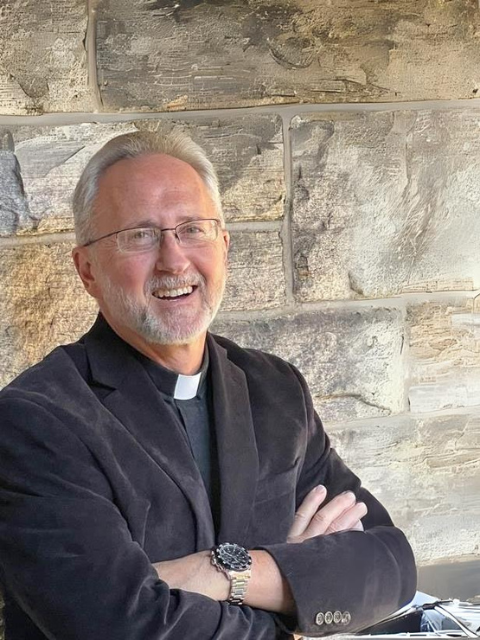
Fr. Tom Berg
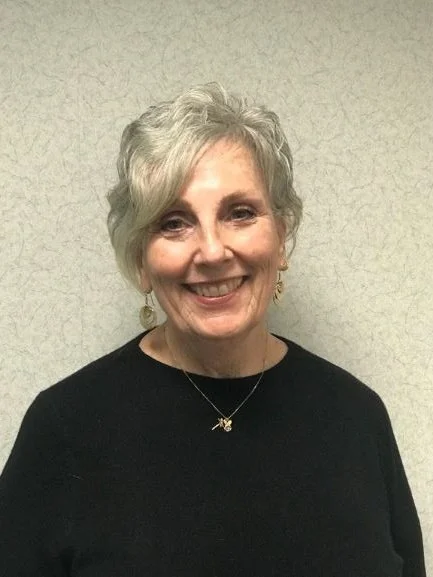
Mary Glowaski
Trauma-Informed Benchmarks
The conversation among the panelists began with an invitation to Fr. Tom Berg to discuss the impetus for the white paper he co-authored, Fully Equipped for Every Good Work. The paper outlines twelve benchmarks for seminarian training. Developed with survivor input, the paper identifies competencies such as:
Understanding trauma-informed pastoral care
Recognizing the dynamics of power in abuse
Managing one’s own emotional discomfort
Meeting with victims, listening to their stories, and validating their experience
Knowing diocesan policies on child and vulnerable adult protection
Knowing how to receive and minister to victim-survivors in the Sacrament of Penance
These benchmarks are meant to spark conversation and implementation of trauma-informed approaches. “Over the past 25 years, certainly since 2002, there’s been greater attention to screening of seminarians and helping men get healthy in seminary,” he commented. “I think this new focus on trauma-informed pastoral care really emphasizes the pastoral piece and how we’re receiving, walking with, and accompanying victims, and I think this can be a huge help going forward.”
Self-Awareness and Presence
The conversation then turned to Mary Glowaski, who reflected on her work with seminarians in the context of co-directing a summer retreat on pastoral care and human formation. She emphasized the importance of seminarians cultivating self-awareness, particularly around their own wounds and triggers, and knowing how to get help. “Self-awareness is a very basic beginning place, she said, “especially when we come to ministering and providing care for people who have been deeply wounded.”
Mary cautioned against the tendency to spiritualize suffering, urging seminarians instead to walk alongside those who are hurting. “It’s crucial for clergy to find a way to inhabit this suffering with the people they are serving, to be with them in it,” she said. “This wounding is not over.” She often reminds the priests she works with that even if survivors themselves are not present in the pews, their families and loved ones are: “A victim-survivor may not be in the pew on any given Sunday, but their parents and grandparents, siblings and friends are there.” Her reflections highlighted the ongoing ripple effects of abuse across generations, and the responsibility of clergy to acknowledge and accompany that pain.
Listening Without Assumptions
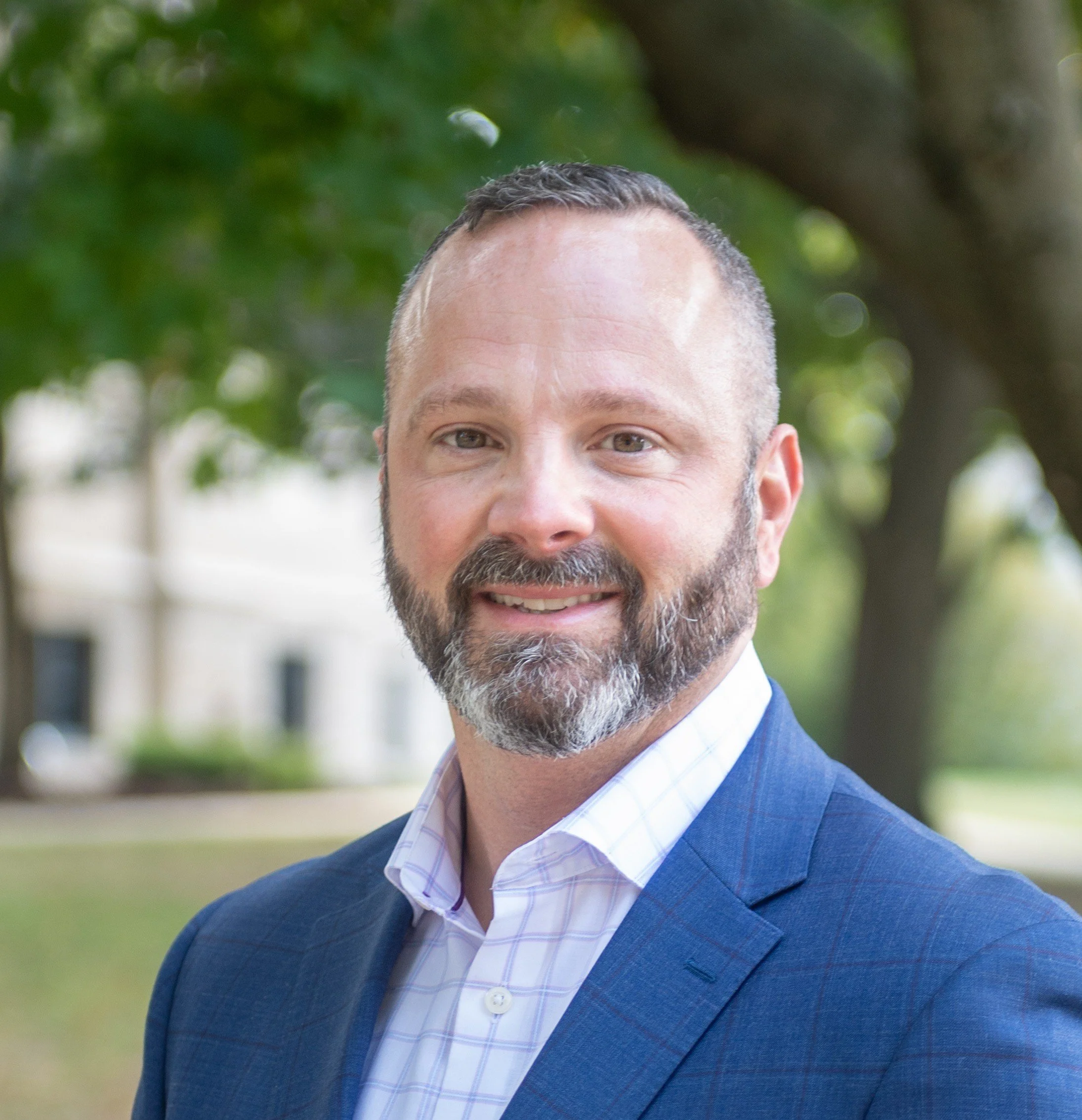
Dr. Jim Richter
Dr. Jim Richter, a survivor and longtime advocate, spoke candidly about his annual conversations with seminarians at Saint Paul Seminary in St. Paul, Minnesota. “One comment I make every year to the seminarians is you have engaged with and talked with folks just like me in the course of your short seminary career, whether you know it or not,” he said. “It just so happens today that you know it. You have a face; you have a story. But I am not the only one, and this will not be a singular experience at all.”
His advice to seminarians is simple but profound: “Just assume that all human beings that come to you are traumatized,” he stated. Jim emphasized that seminarians should avoid making assumptions either about their own abilities, or about the woundedness of those they serve. Instead, he encourages them to simply listen and be present. “I advise them to simply stay in your lane,” he explained, “and if your lane in that moment is to be another human being that is seen as being trustworthy and safe, then just be a trustworthy and safe human.”
Jim also reflected on his own experience of participating in the conversation with seminarians. “There is a moment every year,” he shared, “at which I need to pause, even though I've told this story many, many, many times, where I need to collect myself and give myself a little bit of grace before I continue. But I try to remember if there are those who are willing to have those conversations, bring those topics, do that work on my behalf, then I need to show up and participate. In my mind, this is very much a collaborative effort.”
Facing Resistance and Vulnerability
Fr. Berg shared his experience teaching a Master of Divinity elective on the abuse crisis. “Overcoming the internal resistance,” he observed, “took them a lot of work. They had to get beyond the ignoring, denying, spiritualizing or intellectualizing the crisis to actually do the work and be present.” A turning point for his students was when they connected with actual survivors of abuse. By the end of the course, although they acknowledged it was really hard, they wished that everyone in the program was required to take the course. “It really got them to a place where they weren't inclined to intellectualize or spiritualize it,” Berg noted, “It was becoming very real.”
He also reflected on the impact of the 2018 revelations about Theodore McCarrick on seminarians in formation: “It was such a punch in the gut,” he commented. “There was such a level of outrage and disgust at how this could happen. A lot of these men were suddenly very acutely aware of their own vulnerability as seminarians. That put them on a different footing to go forward and understand this.”
Today, many seminarians work with licensed therapists to address their own trauma. “We’re getting away from doing human formation on whiteboards and with PowerPoints,” Fr. Berg explained. “It’s coming to human formation in themselves, learning human vulnerability and pastoral care from their own traumas, and trying to get healed and well while in formation.”
Jim added that as a survivor his journey towards healing also included a movement away from the head to the heart. “I got into my 30s before things could no longer be intellectualized,” he explained. “What I took away from that awakening was that as challenging as it sometimes is, being with my emotional self was much more important than any other coping mechanism I could have.”
A Privilege to Walk with Survivors
Mary Glowaski shared a reminder that accompaniment is a gift: “In formation, I think it’s important to help anyone who serves in the church, but definitely our seminarians and priests, to see the invitation to walk with people and to be with them as a privilege. It calls us to go much deeper in our relationship with ourselves and with God,” she explained. “Also, it invites us to really, really trust in grace and how it is articulated in these very difficult relationships. There will be discomfort and great pain, and it is a privilege to be invited to be there.”
Jim echoed this sentiment, adding, “I hope that it’s a shared privilege.” Reflecting on his conversations with seminarians, he commented, “Because there isn't any real spiritual, theological, or intellectual content, it's just a human story. I think that story, as I have really come to appreciate, is a great connector of humans.”
Formation of Lay Ministers
The panel discussion closed with a question about what is similar or different in the formation of lay vs. ordained ministers. Mary observed that the Roman collar immediately evokes assumptions of the clerical state and attaches a power differential to the interactions of seminarians. “I have young men early on in their formation who are wearing collars,” she explained, “and people are asking them all these deep theological and pastoral questions just because they're wearing a collar.” She continued by observing that since lay ministers very often work alongside ordained ministers, “it’s essential to help them to understand that these men that they work with and serve with are men. They need healthy, happy relationships with laypeople to support them, because what they carry is heavy.”
Fr. Berg noted that trauma-informed pastoral care is not only for future priests but also for lay ministers: “Laypersons have that responsibility to engage in their own human formation to prepare the best ground for the Holy Spirit to work on and minister to in the Church.”
—Catherine Burke-Redys, Guest Writer