
How Can We Address Abuse of Adults in the Catholic Church?
Over the last decade, many Catholics have started to acknowledge the reality that children and teens are not the only ones to experience sexual abuse by Catholic leaders. Cases like that of the late laicized cardinal Theodore McCarrick, who abused adult seminarians who were under his supervision, reveal that adults are also subject to devastating sexual harm in the Church.
To consider how the Catholic Church might address abuse of adults, we spoke with Julie Hanlon Rubio, professor of Christian ethics at the Jesuit School of Theology at Santa Clara University in California, who has spent much of her career thinking about sex, gender, and family through the lens of Catholic social thought.
For many years, Rubio taught a course called “Sex, Gender, and Sexual Ethics” at Saint Louis University in Missouri, in which she and students grappled with topics such as sexual violence on college campuses and clergy sexual abuse. She periodically invited representatives from SNAP to address her class.
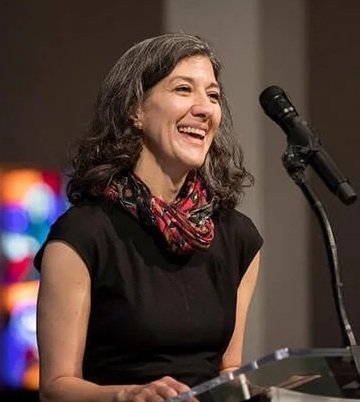
Julie Hanlon Rubio
Rubio and her students also considered the rise around 2017 of the #MeToo movement, which highlighted the role of power imbalance and how hierarchical institutions such as Hollywood, the military, and churches allow powerful, predatory people to victimize those with less power. #MeToo led to increased understanding that some sexual relationships between adults cannot be consensual. For example, sexual activity between a priest and a parishioner who comes to them for pastoral counseling or spiritual direction is always abusive, given the power imbalance between them.
In the summer of 2018, Rubio joined the faculty of the Jesuit School of Theology, starting her new role the very same week that the landmark Pennsylvania Grand Jury Report was released, detailing the disturbing results of a state-wide investigation of clergy abuse. This renewed Rubio’s attention on the problem of sexual abuse by Church leaders. “After 2018, I, like a lot of theologians, started to do more serious interdisciplinary research on clergy sexual abuse,” she says.
She coauthored a 2022 study about clericalism as a structural factor underlying sexual abuse in the Church, and was later appointed to serve a term on the National Review Board, an all-lay advisory board created by the U.S. Conference of Catholic Bishops alongside the Charter for the Protection of Children and Young People or “Dallas Charter,” which was written in 2002 to address the abuse of children, instituting safeguarding measures to keep them safe in Church settings.
The board “is made up of people with a diverse set of expertise on these issues that advise and review the bishops’ efforts to reduce clergy sexual abuse of children and young people,” Rubio explains.
Under the Dallas Charter, the Catholic Church has made important strides in changing its culture to keep children and teens safe, she says. The Church began to train adult volunteers and respond to allegations at the diocesan level with better support for victims and review of cases. “My generation of parents was different than the generation before,” Rubio adds. “We watched our kids in a different way. And our kids were exposed to training, not only at church, but at scouts and school. A big part of the reason that there’s less abuse of children right now is that priests and adult volunteers just aren’t alone with children anymore.”
The Catholic Church requires similar culture changes to prevent the abuse of adults. Here are some important steps that Rubio proposes to halt this harm.
Expanding Our Understanding of “Vulnerable Adults”
“This term provides an opening for thinking about adult abuse,” Rubio explains. Canon law makes it a crime to harm “vulnerable adults,” which originally referred to people with developmental disabilities that made them legally equivalent to minors. In the 2019 Church law, Vos estis lux mundi, Pope Francis expanded the protected category of vulnerable adult to apply to “any person in a state of infirmity, physical or mental deficiency or deprivation of personal liberty, which even occasionally limits their ability to understand or to want or otherwise resist the offence.” The expanded definition was an effort to acknowledge power imbalances that could put many adults at risk for abuse, such as when a priest or deacon uses their spiritual authority to groom and abuse a parishioner.
While some officials at the Vatican seem to be open to considering this expanded view of how adults could be vulnerable to harm, Rubio notes that many dioceses in the United States still adhere to the narrower definition of “vulnerable adults,” referring to adults with developmental disabilities. This leaves other adults unprotected by Church law. Local dioceses would need to adopt the broader definition used in Vos estis.
2. Extending the Dallas Charter, or Creating New Protections
Rubio suggests that one way to protect adults would be to alter the Dallas Charter with new language that would extend the protections given to children to adults as well. Or, she says, church leaders could opt to write a separate document that applies to protection of adults and create new processes and committees of bishops and laypeople to oversee this work.
3. Applying Social Justice Principles
Sexual relationships between Church leaders and other adults such as parishioners have often been viewed in the Church strictly as a violation of vows (such as the vow a priest takes to remain celibate) or as a sexual sin. While this is true, Rubio sees this as a limited, incomplete way to view these interactions. She recommends considering sexual violence in light of Catholic social thought. “When we put those two things together, then we understand sexual violence as an act of injustice, an act against human dignity,” she says. “It violates the dignity of a human person.”
4. Considering Our Role in Creating New Church Culture
In her research article, “Beyond Bad Apples: Understanding Clergy Perpetrated Sexual Abuse as a Structural Problem and Cultivating Strategies for Change,” Rubio and her coauthor Paul Schutz explored clericalism, which they define as “a structure of power that isolates clergy and sets priests above and apart, granting them excessive authority, trust, rights, and responsibilities while diminishing the agency of lay people and religious.”
Rubio believes that creating a safer Church involves all members of the Body of Christ recognizing and working to dismantle clericalism. “We have to help people understand how we may have internalized clericalism,” she says. “It not only makes us more vulnerable to abuse, but it may also make it hard for us to see abuse and to call out abuse.”
Protecting adults means working to create safer, “anticlericalist” spaces that are more collaborative and empower people at all levels of the Church, Rubio says, adding that we must build a Church where adult victim-survivors are believed. “It is much more likely that we are not hearing stories than that we are hearing false stories,” she says. “We know that with few exceptions, people do not make this stuff up.”
—Erin O’Donnell