
Nancy Pieffer
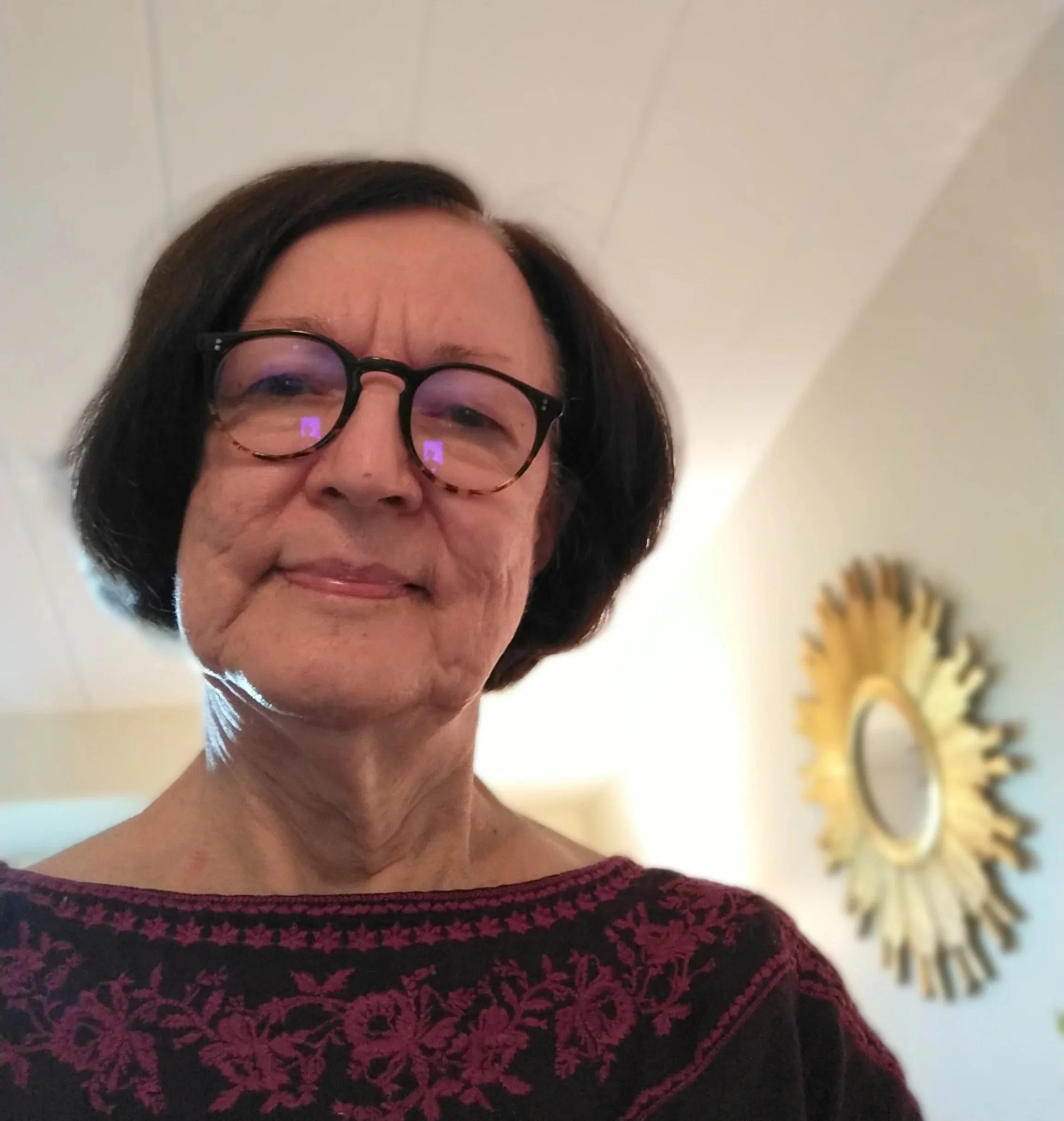
“I am so grateful to say that my life is more than my trauma, and in many ways I triumphed in spite of my pain.”
Awake: Nancy, thank you for sharing your story with all of us. Please help us get to know you. Tell us a little bit about your life.
Nancy Pieffer: I have lived my whole life in Pittsburgh, Pennsylvania. I am a sister, cousin, and friend. I am a retired social worker and my retirement allows me more time to savor myself as a loving family member to my brother, sister-in-law, cousins, and my circle of friends. I am grateful to be part of this beloved community. I also greatly enjoy events in my neighborhood, with three favorites being a book club, an open mic at my local library, and the gym. I also love walks in nature. I am a student and practitioner of mindfulness and meditation. As a retired social worker I cherish all the experience I had working to help others in hospitals, social service agencies such as the Pittsburgh Action Against Rape and the Domestic Abuse Counseling Center, hospice, and home care for elders in need of help.
Like many survivors, I am a wounded healer, a term used by psychologist Carl Jung and others to describe those deeply injured and wounded who transform the wounds into a gift of offering healing and hope to others, their experience of suffering helping them to understand others. I am forever grateful for the opportunities I had and still have to help others.
Q: Wow, Nancy. It sounds like you are part of a beautiful community in Pittsburgh. And you’ve shared your gifts with so many people as a social worker. What would you feel comfortable sharing about your experience of abuse?
A: At this time in my life I hold both sides of my trauma: the deep woundedness and the healing experiences I’ve had and continue to have with family, friends, two psychotherapists, a psychiatrist, and my primary care doctor. The abuse resulted in deep depression, flashbacks, complex PTSD, complex grief, anxiety, and panic throughout my life. The sexual abuse I experienced from a Catholic priest was horrific and cruel. It began when I was around the age of three and a half, and ended when I was twelve and the priest died. The abuser was a trusted family friend and I went with my family for weekend gatherings at his rectory a few times a year. This priest took me alone on walks that ended in an indoor playground in the school building where he hurt me. The sexual abuse involved orderly rituals of being undressed and dressed, and progressed from being touched sexually, to having to perform oral sex, to being vaginally raped.
The priest ensured secrecy and silence from me by telling me I would be abandoned, that my parents would send me to an orphanage if I told them. He told me that his abuse of me was God's will, that to speak of it would be a mortal sin. This abuse affected every part of my life including relationships, success in school, and my work life. Due to my young age and the severity of the abuse, every part of my development was affected. I also grieve for the ways all the difficulties I experienced affected my family. I will never know what my life would have been like if I had not been traumatized.
Q: Oh, Nancy, I’m so sorry about the horrors you experienced, including the cruel things the abuser told you. You have clearly done a lot of work to heal. What has been most important in your healing process?
A: My healing is ongoing and evolving. My struggles with depression, flashbacks, and complex PTSD are lifelong. At this point in my life I still hold the trauma and some deep, profound healing experiences. Right now I know I am whole and strong.
I had loving parents whose love sustained me during the abuse and always. My mother and father had great hearts and great gifts in parenting, in helping others and co-creating community. Although I was never able to tell them what happened, I know deep within me that they would have offered strong love, support, and advocacy and would have gone with me to the diocese. My memories and words were not clear until I was in my fifties. My father was dead and my mother was greatly fragile in her elder years. I have a most loving brother and a loving extended family. My brother accompanied me through the reconciliation compensation program offered in my diocese. He sat in the room while I told my story to the independent lawyer from the firm hired by the diocese. Close cousins and dear friends also hold my heart and have my back.
My story is also a story of being helped by professionals. I found true healers in two therapists, my psychiatrist, and my primary care doctor. These healers helped me through my darkness and brokenness and encouraged my light, my strength, and my ability and openness to great love. I am so grateful to say that my life is more than my trauma, and in many ways I triumphed in spite of my pain. I consider my profession as a social worker a great triumph, as well as the many loving relationships I have experienced and continue to treasure.
Q: It’s so good to hear about these triumphs! Given your experience of abuse, how would you describe your relationship with the Catholic Church?
A: I grew up Catholic, attending Catholic schools through high school. My fearful self sought distance from the priests of the parish as well as from the nuns who I experienced as mean spirited in dealing with everyday problems and situations. Some used physical punishment, others emotional abuse such as silence for extended periods.
I had many good experiences at a monastery and retreat center in my neighborhood. Retreats became a place where I could experience Divine Love and the experience of community with other Catholics. I attended my first retreat when I was 21. To this day, I continue to love having spiritual adventures with friends at several retreat centers in Pennsylvania and West Virginia. I also attend on-line retreats and workshops focusing on meditation.
There was a time when I found community and opportunities to serve through the women's group at my cathedral and an associate group at a nearby retreat center, but I left that center because I witnessed priests and other leaders there abusing their power. I spent a lot of time thinking about and studying power and control issues while completing my master of social work studies and through my work in the field. I am no longer Catholic or a member of any organized religion because I find the power structures in those institutions to be unhealthy. I now seek Jesus and study Jesus from an interfaith perspective, before the institutional church and outside the structures of institutional religion. I also study contemplation, and practice mindfulness and meditation.
One of the worst parts of my sexual abuse by a priest was being forced to be silent. This man, representing God, threatened me with mortal sin. He told me that I would not be worthy of God's love or my parent's love if I spoke.
As I heal more deeply from these threats, my empathy for those marginalized by the Church also deepens. I have accompanied many people who are divorced and those of the LGBTQ+ community. I became aware of their hurt as clergy instructed them to obey Church teaching and the rules of the Church, and passed judgement on their life experience, threatening mortal sin and declaring them unworthy of sacraments. Again, this leads me to study Jesus before institutionalized religion.
Q: Thank you for describing your faith journey, Nancy. I know you have had several opportunities to share your story with bishops and others in your diocese. What can you tell us about these experiences?
A: I became deeply aware of abuse at the diocesan level when the Boston Spotlight investigation became public in 2002, and again when the Pennsylvania Grand Jury Report was released in 2018. I was distraught at both times and reached out to my diocese. Such momentous times also encouraged me to use my voice after years of silence. I spoke tearfully and strongly in meetings with two bishops, the diocesan victim assistance coordinator, and the lawyer handling the reconciliation/compensation program.
In 2002, the time of the Spotlight investigation, my bishop at the time put an article in the Pittsburgh Press inviting survivors to come forward and receive an apology. When I met with him, he offered both an apology and deep listening. He believed me and responded with healing prayer and compassion. He also offered to pay for my therapy. I feel strongly that it is vital that a survivor's therapy and medical treatment be funded by the Church for as long as needed. Later, another bishop wrote a letter to a victim while he was in a psychiatric facility, cutting off funds for his treatment. This victim died by suicide, and I remain heartbroken for him and his family.
In 2018 the bishop of my diocese met with me and listened as I sobbed and described my anguish as I read the Pennsylvania Grand Jury Report detailing the abuse by priests in Pennsylvania, as well as the mistakes and cover-up by bishops. This bishop offered listening and repair and held listening sessions throughout the diocese.
I spoke at the listening session in the cathedral, with concerned Catholics and the bishop present. I will always remember with gratitude all of those attending this session standing and applauding as I asked for advocacy for all survivors.
Later, this bishop offered repair in the form of financial compensation mediated by an independent law firm. Receiving an offer of money was extremely helpful since, like many survivors, my woundedness impacted my financial success. These examples of helpful diocesan responses should happen in every diocese, worldwide. My letter to Pope Leo, one of the letters that Sara Larson carried to Rome in June, advocated for this. My heart breaks for the many survivors who have received minimal or no response from their bishop, a hurtful response, or no repair.
Q: Nancy, thanks for all that you shared with us. We pray for your continued healing. You have obviously learned many lessons in your healing journey. As we close, do you have a message for your fellow survivors?
A: You are more than your woundedness.
Search for healing professionals, such as social workers, psychotherapists, and psychiatrists. They are immensely valuable for your journey, for your life.
Know that you can hold both the deep woundedness of the abuse and the power, learning, and tools to triumph over the pain.
If you decide to speak with your bishop, surround yourself with love and support first. Call upon trusted family, friends, professionals to accompany you on the journey. Along with the fear that comes up, you can also be strong, persistent, and courageous.
Stay in solidarity and community with other survivors. The Awake community is a great force in bringing us together. I hold gratitude for the Awake community, staff, and in a special way, my Survivor Circle.
—Interview by Erin O’Donnell
Note from Awake: We extend heartfelt thanks to Nancy Pieffer for sharing her story. We also want to acknowledge that every survivor’s path is different. We honor the journeys of all who have experienced sexual abuse by Catholic leaders and are committed to bringing you their stories. In addition to Nancy’s story, we encourage you to read our previous Survivor Stories here.
If you have experienced sexual abuse, you can receive support through the National Sexual Abuse Hotline, 800-656-4673, which operates 24 hours a day. If you seek support from the Catholic Church, you can find the contact information for your diocesan victim assistance coordinator here. Also, Awake is always open to listening to and learning from survivors. If you would like to connect with us, we invite you to email Executive Director Sara Larson at saralarson@awakecommunity.org.