
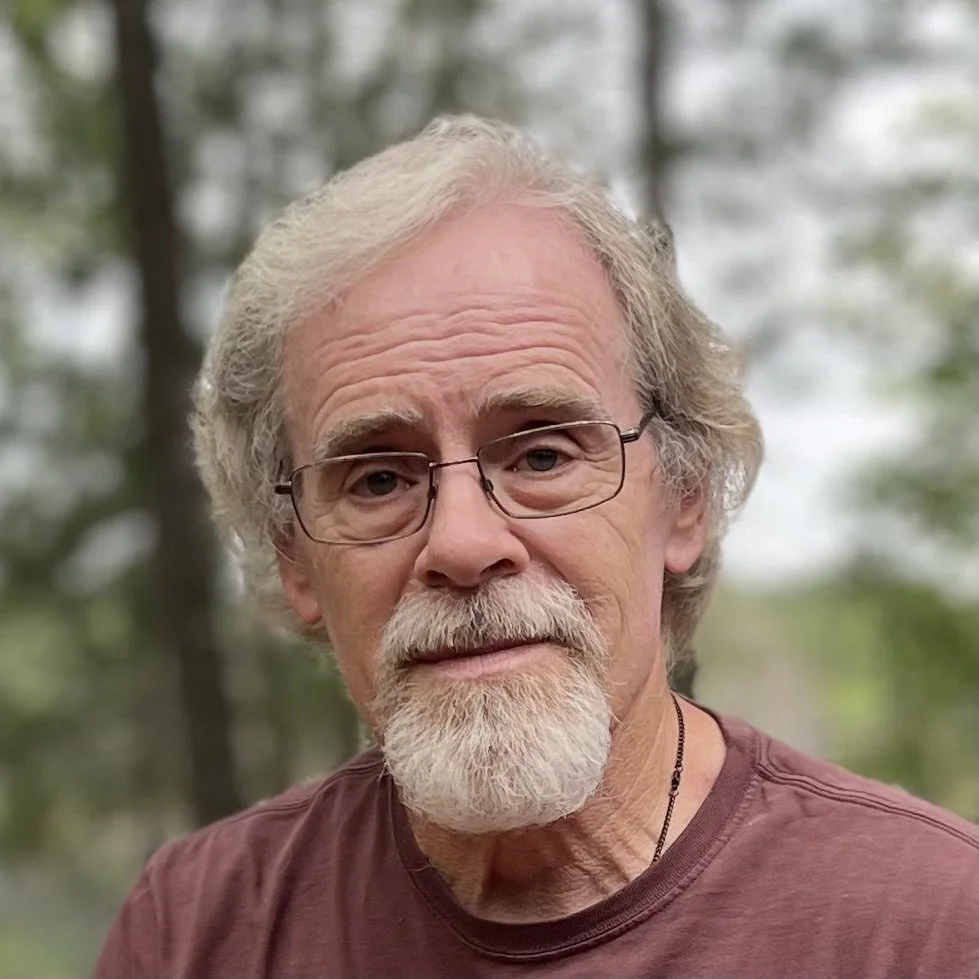
Timothy Ehlinger
“It’s taken years
for me to find language to tell this story. My recollection of the event hasn’t changed, but with each retelling, I discover new truths about me, my abuser, and the systems that promote and perpetuate abuse.”
Awake: Tim, we’re so glad to hear your story. To start us off, what would you like to share about yourself and your life?
Timothy Ehlinger: I am blessed — born into a large and loving family; raised in a tradition of faith that believes we are all created whole and holy; educated within communities that value the search for truth, curiosity, and asking challenging questions; and united in love with my wife Kathy, and our children and our grandchildren. Looking from the outside, I’ve lived a charmed and privileged life. As I enter my seventh decade, I am profoundly grateful for the gifts I’ve been given along the way.
Q: Thank you for this beautiful description of your life, Tim. If we could shift directions a bit, what would you be open to sharing about your abuse?
A: Love of nature and family time outdoors have been a central part of my life since childhood and form the basis of my understanding of “God.” As a 14-year-old attending an all-boys high school, I was encouraged by a teacher to join a group of seven other freshmen to work as counselors-in-training at a summer camp in northern Wisconsin run by the religious order that operated our school. We met as a group and individually with several priests and teacher-seminarians during the school year to discuss our personal interests (sports, nature, arts and crafts, horses, archery, rifle range, etc.) and prepare for the summer. We developed into a close-knit community with diverse interests and a shared purpose.
When we arrived at the camp for the summer, we were each assigned as a junior counselor to a cabin and placed into one of the activity areas as assistant director. You can imagine how excited I was when chosen for the “nature area” and given the chance to share my love and understanding of nature. It was intoxicating for me and, looking back after 55 years, I can now recognize the telltale signs of grooming behavior. Later that summer, the priest who had become my mentor and I led a group of campers on a hike into the forest to sleep “under the stars.” It was a chilly night and, as an expert in wilderness survival, he told us to zip-up our bags together and sleep in pairs to conserve body warmth. On that dark night in a silent forest, sleeping next to the embers of a dying fire, what had been the fiber and fabric of my understanding of God and trust were torn to shreds by a “man of god.”
Q: I’m so sorry about this terrible betrayal, Tim. It sounds truly devastating. Could you say a little about why you chose to share your story with our community?
A: We are all blessed and broken — this is one reason I don’t refer to myself as a survivor. Being labeled “survivor” carries the implication that there is a healing destination, a time when the abuse can be put in the past. The effects of abuse ripple out from the individual and change over time and space. They reach far beyond the specific details of the actual event to impact relationships, families, communities, and the Church. Through Survivors Network of those Abused by Priests (SNAP) and Awake, I’ve shared and listened to deeply personal stories of the breadth and depth of sexual, psychological, and spiritual abuse by priests and religious leaders. Although numbers and data on abuse events have the potential to change minds, it takes the telling and retelling of stories to truly change hearts and confront the sickness underlying abuse by the institutional Church.
It’s taken years for me to find language to tell this story. My recollection of the event hasn’t changed, but with each retelling, I discover new truths about me, my abuser, and the systems that promote and perpetuate abuse. For example, I’ve found the 4 “Fs” of responses to trauma (Freeze, Flee, Fight, Fawn) useful as a language to understand my experience. At the time of the assault, I froze, both shocked by not knowing what was happening and paralyzed by fear that a sleeping camper might wake up and hear what he was doing. If I pretended to be asleep, maybe I’d wake up to find out it was a bad dream. It wasn’t. The following days were a blur, but my next response was to flee — not by running away from camp, but by doing more and more activities to try to keep the memory of the assault at bay and put it behind me. In the weeks, months, and years following, I grew into a classic overachiever, never staying still long enough to face what was chasing me.
Q: Thank you for describing the power of telling and retelling these personal stories and working to make sense of them. Is there anyone who has been particularly helpful on your healing journey?
A: Ten years after the assault, I was blessed in love, marriage, and partnership with Kathy. I was finally able to confide in her following the death of my perpetrator. She was the first person I’d told. It was comforting to finally share what had happened, and together we raised a wonderful family. But I didn’t stop running — until the COVID-19 pandemic brought the world to a standstill. There was no place to run, and I crashed. Stories of clerical abuse in the news involving other members of the religious order of my abuser triggered old memories, nightmares, and depression. My wife encouraged me to seek help, and a wise therapist suggested I join a SNAP men’s support group. Through weekly online meetings with my SNAP brothers, I grew in my understanding of the complexity of clerical abuse — that for most of us, “survival” is a daily, ongoing process — and perhaps most importantly, I came to appreciate the value of collective healing through the sharing of our stories. We were not alone, and together we searched for light in the darkness.
Q: The support of Kathy and your SNAP brothers sound like real gifts. How do you describe your relationship with God?
A: A common saying in recovery communities is “God is either everything or nothing.” As an evolutionary biologist by academic training and restoration ecologist in my professional practice, I want to and try to see, hear, and know God in all parts of the world around me. Although I never told my mom what happened, when I came home from camp, somehow she knew that something in me had changed. That August, she took me to the local music store and (although we could hardly afford it) bought me a guitar for my 15th birthday. That guitar became my closest friend. We learned to talk, play, and sing together. She listened to my feelings and spoke to me with her soft voice. Together, we found our way through high school and college. During those years, she was the voice of God in my life. Experiencing the Spirit of creation in music and the cycles of nature is where I find God and where God comes to me. Kathy and I are fortunate to be part of a wonderful music ministry at our parish where we find community and God in each other.
Q: It’s moving to hear that music has been the voice of God in your life, Tim. Could you describe your relationship to the Catholic Church?
A: I’ve lost faith and trust in the institutional Catholic Church. By adopting a risk-management approach to abuse, its leaders have worked tirelessly with legal counsel to protect their systems of power and wealth at the expense of addressing the underlying drivers of a system that allowed and perpetuated abuse. Yes, perpetrators of sexual abuse are pervasive across society, not just in the Catholic Church. Yet it’s not enough to say this crisis is due to a few bad apples. Abuse is a symptom of a systemic illness within the institutional church. I’ve transitioned through freeze and flee, and now choose to join in the fight to reclaim our faith from the institution that betrayed its flock. I’m not angry or seeking retribution. On the contrary, I know some amazingly good men in the priesthood who have suffered greatly because of the stain and stigma caused by the abuse cover-up. Healing and reconciliation are needed on both sides of the clerical divide. The institutional church has failed miserably, and it must admit its sin, act with contrition, and be redeemed and transformed through death and rebirth.
Q: Thank you for all that you’ve shared here, Tim. It’s a gift to hear your insights. As we close, what’s one important idea that you would like Catholics to understand about sexual abuse in the Catholic Church?
A: I truly do believe that the sexual abuse crisis in the Catholic Church is not about sex. It’s about the need for and the desire to control, perpetuated by a system that prioritized protecting its power. Relationships change systems. Relationships that heal form at the speed of trust. Once lost, trust is not easily restored. It can only develop when relationships are built upon power shared equitably; among men and women as full and equal partners at all levels of authority, ministry, and leadership. Until the powers-that-be in the Church come face to face with their own weakness and join with the lay community to develop a “Theology of Power,” we will not have the trust needed to heal and rebuild the Church as the Body of Christ.
—Interview by Erin O’Donnell
A Note from Awake
We extend heartfelt thanks to Tim Ehlinger for sharing his story. We also want to acknowledge that every survivor’s path is different. We honor the journeys of all who have experienced sexual abuse by Catholic leaders, and we are committed to bringing you their stories. In addition to Tim’s story, we encourage you to read our previous Survivor Stories here.
If you have experienced sexual abuse, you can receive support through the National Sexual Abuse Hotline, 800-656-4673, which operates 24 hours a day. If you seek support from the Catholic Church, you can find the contact information for your diocesan victim assistance coordinator here. Also, Awake is always open to listening to and learning from survivors. If you would like to connect with us, we invite you to email Survivor Support and Engagement Coordinator Rebecca Dodge at rebeccadodge@awakecommunity.org.